

21 Oct Preventing Back Strain While Raking Leaves and Shoveling Snow
Preventing Back Strain While Raking Leaves and Shoveling Snow
Every fall and winter on Long Island, the same two chores send people limping into our clinics: raking leaves and shoveling snow. Both are workouts built out of bending, twisting, and lifting, usually done in the cold without a warm-up. A 17-year national study found that snow shoveling alone sends an average of 11,500 people to U.S. emergency rooms each year, and the lower back is the most commonly injured area. At All-Star Physical Therapy, we’d rather help you with preventing back strain than treating it. Here’s how.
Preventing Back Strain While Raking Leaves
The American Academy of Orthopaedic Surgeons notes that raking involves more reaching, bending, and lifting than most people expect, and most injuries come down to poor technique and overuse. A few adjustments help:
- Pick the right rake. The handle should feel comfortable for your height so you’re not hunching to reach the ground.
- Keep your back straight and knees slightly bent. Shift your weight with your legs instead of twisting at the waist.
- Don’t throw leaves over your shoulder. That twisting motion puts direct stress on the spine.
- Switch sides every few minutes to spread the work across both sides of your body.
- Bend at the knees to lift bags, and don’t overfill them, especially when the leaves are wet.
- Rake onto a tarp and have someone help you drag it rather than hauling bag after bag.
Preventing Back Strain While Shoveling Snow
Researchers at Nationwide Children’s Hospital found that muscle exertion caused more than half of shoveling injuries. Their advice matches what we teach patients every winter:
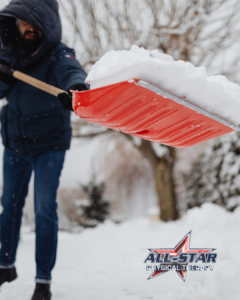
- Push, don’t lift. Whenever you can, push the snow to the side instead of scooping and throwing it.
- When you do lift, lift small. Keep the shovel close to your body, bend at the hips and knees, and let your legs do the work.
- Never twist to throw. Turn your whole body and walk the snow to where it needs to go.
- Use an ergonomic shovel with a bent handle to reduce how far you bend.
- Clear early and often. Several light passes during a storm beat one heavy session afterward.
- Wear slip-resistant boots and watch for ice under fresh snow.
Warm Up First, and Know When to Stop
Both the AAOS and the shoveling researchers make the same first recommendation: warm up for about 10 minutes with light movement and gentle stretching before you start, especially in cold weather. Cold muscles strain more easily, so this is the single biggest step in preventing back strain. Take breaks, and stop if you feel sharp pain, pain shooting down a leg, or numbness. Because shoveling also stresses the heart, anyone over 55 or with a medical condition should check with a doctor first, and chest pain or shortness of breath means stop immediately and call for help.
Already Feeling It? We Can Help
If your back is sore after a weekend of yard work, don’t wait for it to become a chronic problem. Our physical therapy for back pain focuses on relieving pain, restoring movement, and building the core and hip strength that protects your spine the next time the leaves or snow come down. We also treat the shoulders and hips these chores wear down. Visit our services page to see the full range, check our FAQ for insurance and visit details, or request an appointment at our Syosset or Seaford office today.
Sorry, the comment form is closed at this time.